Sam Long · 1 September 2026
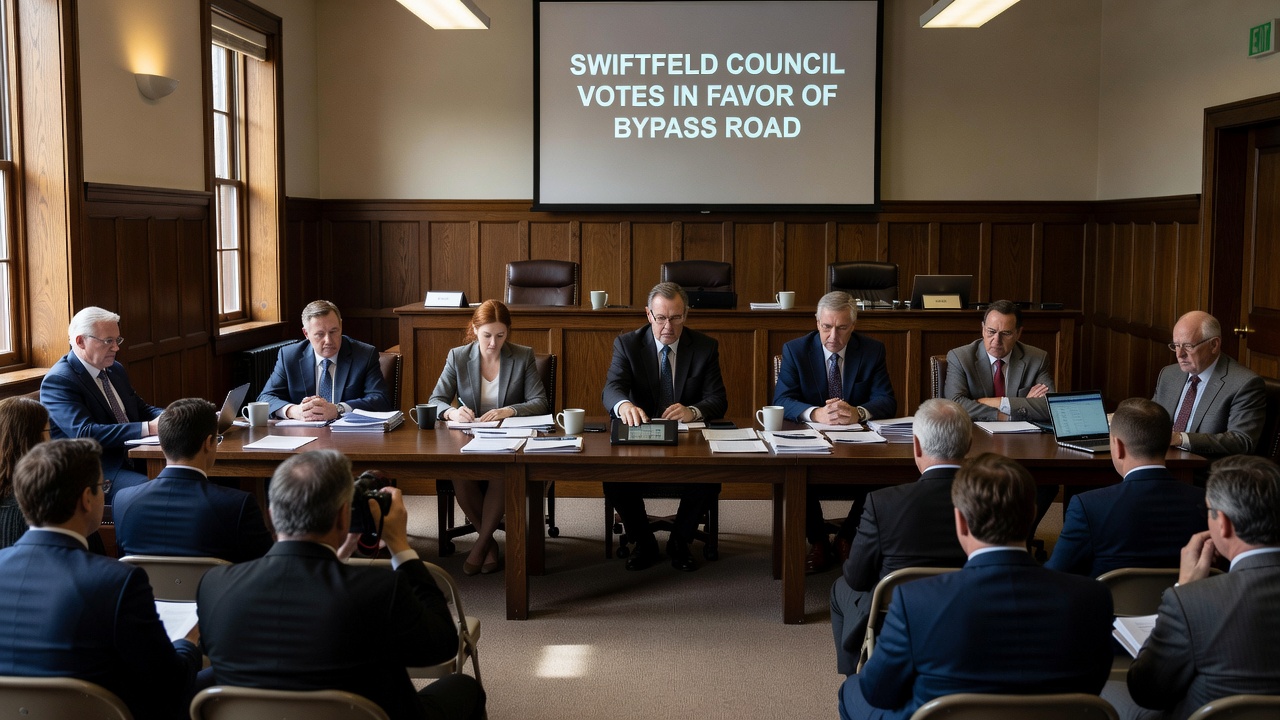
The Swiftfeld Regional Council convened yesterday to deliberate on the proposed bypass road project aimed at reducing traffic in the central districts. After extensive discussions, the council voted 8 to 3 in favor of advancing the project to the next phase of planning and funding allocation. The decision follows months of public input and traffic studies indicating rising congestion levels.
Vote Proceedings and Council Statements
Council members highlighted the necessity of the bypass to support growing population demands and economic activities. Proponents argued that the new road would divert heavy vehicles away from residential areas, improving safety and air quality. Opponents raised concerns over potential environmental impacts and costs exceeding initial estimates. The final tally reflected a clear majority support, with some members abstaining due to conflicts of interest. Public consultations held prior to the vote showed mixed community responses, with businesses in the town center largely in favor while environmental groups expressed reservations. The council has allocated funds for an environmental impact assessment to be completed within six months. Further debates focused on route alignments and integration with existing public transport networks.
Project Timeline and Future Implications
Construction is slated to begin in early 2025, pending approval from regional authorities. The bypass is expected to span 12 kilometers, connecting the eastern and western outskirts of Swiftfeld. Officials estimate it will reduce peak hour congestion by up to 40 percent. Long-term benefits include enhanced connectivity for local industries and potential job creation during the building phase. Monitoring committees will be established to oversee adherence to environmental standards throughout the project duration. Residents are encouraged to provide feedback through the council's online portal as the planning progresses. This decision marks a significant step in Swiftfeld's infrastructure development strategy for the coming decade. Additional measures include noise barriers and wildlife crossings to mitigate effects on surrounding habitats. Project costs are projected at 45 million euros with funding from regional and national sources.